
How the ski pass break-even works
A season pass is worth it when it costs less than buying the same days one at a time. So the break-even point is the pass price divided by the price of the day ticket you would really have bought, rounded up. That is the method Ardent Workshop lays out, and it is what this calculator does for each person.
1. Use the ticket price you would really pay
Window prices are the highest prices. If you would buy a multi-day pack or advance tickets online, divide its price by its days and enter that as the lift ticket price. A cheaper ticket means the pass needs more days to pay off.
2. Take out the blackout days
A pass does not work on its blackout dates. Any day you plan to ski on one is a ticket day whether you hold the pass or not, so it comes off the pass days and its ticket goes on the pass side of the bill. Snowthere points out that blackouts on cheaper passes tend to fall on school holidays, which are the days families can actually travel.
3. Check each person, then the family
Passes are sold per person, and kids' passes are usually discounted more than adults', so one person can pass break-even while another does not. The calculator shows each person's verdict and the cheapest mix. For the family, Booked.life's rule is total pass spend divided by the family's daily lift cost. Here that is worked out day by day, so a parent who skis fewer days stops adding value once their days run out.
4. Cost per ski day
Cost per skier-day is the season's lift cost divided by the days each person skis. With the pass it includes the tickets you still buy on blackout days. It leaves out lodging, gas, food and gear, which cost the same either way.
Worked example
A family of four plans 10 days. 2 of them fall on the pass's blackout dates. One parent will only ski 6 days. The prices below are examples, not any resort's real ones.
| Adult 1: $849 pass, $129 ticket, 10 days. Breaks even at 6.6 days; $1,107 with the pass vs $1,290 in tickets | $183 |
|---|---|
| Adult 2: $849 pass, $129 ticket, 6 days. Breaks even at 6.6 days; $1,107 with the pass vs $774 in tickets | −$333 |
| Teen: $649 pass, $109 ticket, 10 days. Breaks even at 6.0 days; $867 with the pass vs $1,090 in tickets | $223 |
| Child: $449 pass, $89 ticket, 10 days. Breaks even at 5.1 days; $627 with the pass vs $890 in tickets | $263 |
| Family: $3,708 with passes vs $4,044 in tickets | $336 |
Adult 1's pass is $849 against $129 tickets: 849 ÷ 129 = 6.6, so it pays off on pass day 7. With 2 blackout days the pass covers 8 of the 10 days, and the season costs $849 + 2 × $129 = $1,107 instead of $1,290 in tickets. Adult 2 gets only 4 pass days out of 6, 3 short of break-even, so tickets are $333 cheaper for them. The teen's pass pays off on day 6 and the child's on day 6.
Passes for all four save $336, and together they pay off on family pass day 7. Passes for Adult 1, Teen and Child and tickets for Adult 2 save $669.
Before you buy
- Count last season's days, not this season's plan. Plans made in the fall don't include bad weather, sick kids or work trips.
- Check the blackout calendar against school vacation weeks before you pick a cheaper limited pass.
- Price each person. A child or teen may clear break-even on fewer days than a parent.
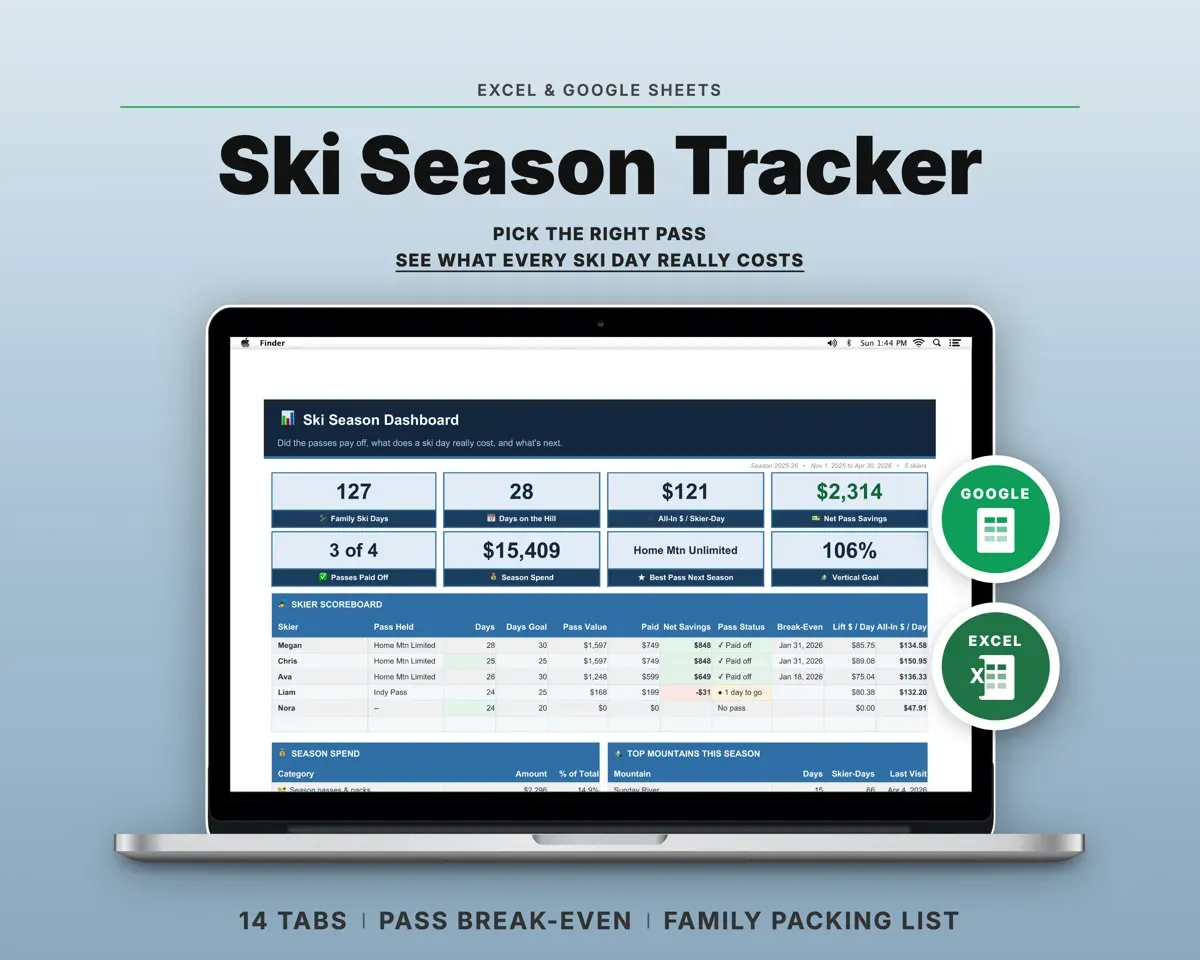
- Keep count once the season starts. The Ski Season Tracker logs each ski day and shows the date each pass actually paid off.
Sources
- Ardent Workshop: How Many Days Make a Ski Pass Worth It? (pass price ÷ the ticket you would really buy, blackout days as ticket days, use last season's days)
- Snowthere: Epic vs Ikon for a Family of Four (passes are bought per person, child break-even, blackouts on holidays)
- Booked.life: In Defense of the Mega Ski Pass (family break-even = total pass spend ÷ total daily lift cost)